
Good Girl Gone Bad
Play Good Girl Gone Bad
Good Girl Gone Bad Screenshots















Good Girl Gone Bad review
Explore branching storylines, character development, and gameplay mechanics in this narrative-driven visual novel
Good Girl Gone Bad is a narrative-driven visual novel that puts you in control of Ashley Graham’s destiny. Created by Eva Kiss, this game combines hand-drawn artwork with complex branching storylines that adapt based on your choices. Whether you’re drawn to character-driven narratives, meaningful decision-making, or exploring morally ambiguous storylines, this guide covers everything you need to know about the game’s mechanics, story paths, and what makes it stand out in the visual novel genre.
Understanding Good Girl Gone Bad: Game Overview & Core Mechanics
Let’s be honest—when you hear “visual novel,” a certain image probably pops into your head. Maybe it’s static anime sprites against bland backgrounds, or a linear story where your choices don’t really matter. I used to think the same way. 🫣 Then I played Good Girl Gone Bad, and my entire perspective on what a character-driven story game could be was completely rewritten. This isn’t just a passive experience; it’s an invitation to live another life, make messy decisions, and watch the consequences unfold in breathtaking, often heartbreaking, detail.
At its core, Good Girl Gone Bad is a masterclass in interactive storytelling. You step into the shoes of Ashley Graham, a young woman at a personal and professional crossroads, and guide her through one transformative summer. What makes this Good Girl Gone Bad visual novel so compelling isn’t just its mature themes, but the sheer weight of every single decision you make. This chapter will break down everything that makes this game special, from its stunning art to the brilliant mind of its protagonist.
### What Makes This Visual Novel Unique
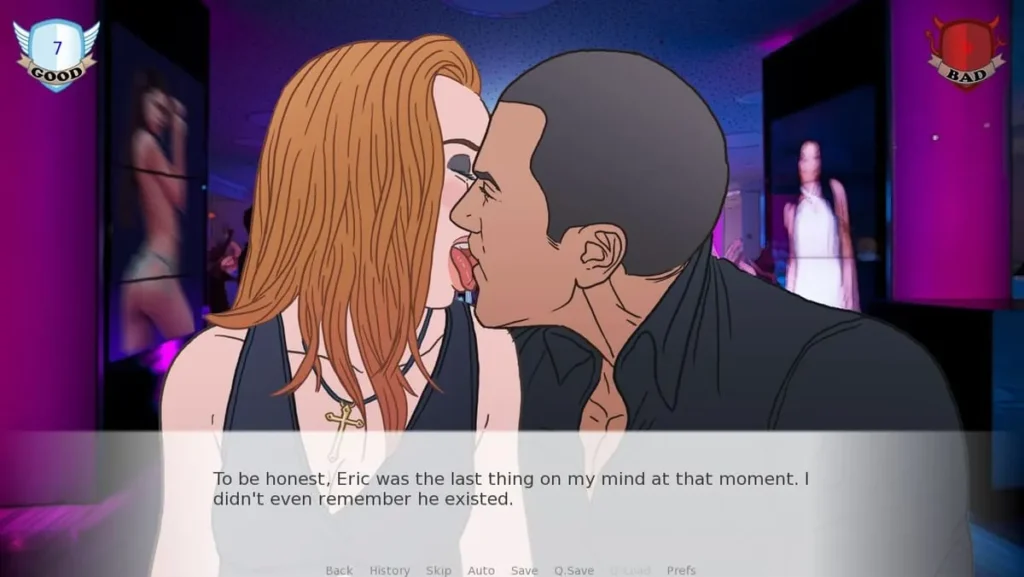
So, what sets this game apart in a sea of narrative adventures? 🤔 It starts with a commitment to authenticity and artistic cohesion that you can feel from the very first scene. While many games in the genre rely on 3D models or generic art, Good Girl Gone Bad proudly declares itself a hand-drawn visual novel game. Every character, every expression, every background is crafted with meticulous care. This isn’t just an aesthetic choice—it’s a narrative one.
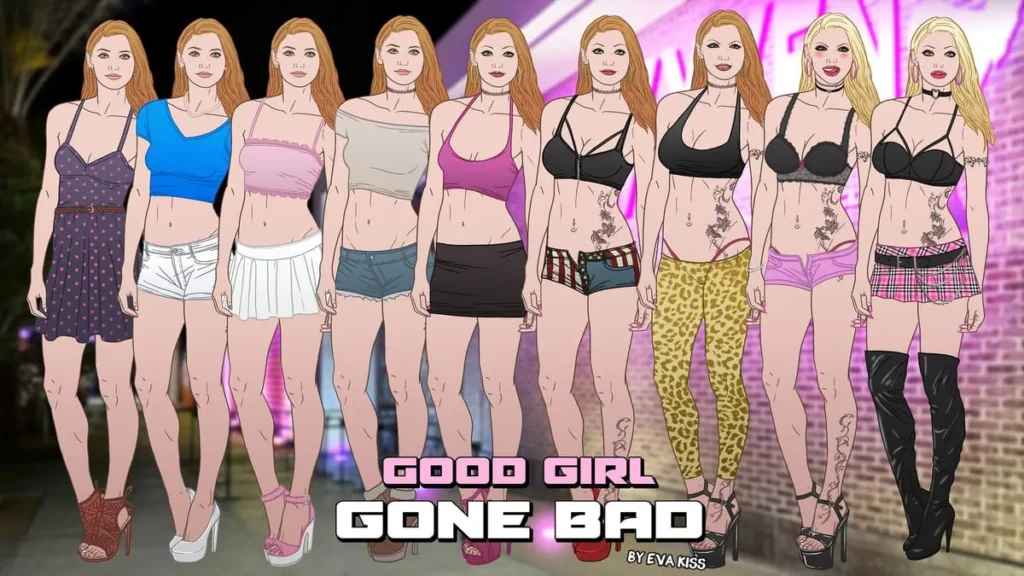
The art style is raw, expressive, and deeply human. The lines have a sketch-like quality that perfectly mirrors the game’s themes of imperfection, growth, and messy reality. Ashley’s joy, her doubt, her rebellion—it’s all conveyed through subtle shifts in her hand-drawn expressions that often feel more genuine than any hyper-realistic 3D render could. This artistic direction creates an intimate atmosphere, making you feel like you’re flipping through the pages of a very personal, very provocative graphic novel. 🎨
But the uniqueness doesn’t stop at the art. The game’s setting and premise ground its more dramatic moments in a relatable reality. Ashley isn’t a superhero or a fantasy heroine; she’s a recent graduate working a tedious retail job, navigating complicated friendships, family expectations, and her own desires. This grounding makes her journey—whether you steer her toward ambition, hedonism, romance, or something else entirely—profoundly engaging. The Good Girl Gone Bad gameplay loop is deceptively simple: read, reflect, and choose. Yet, within that simplicity lies an astonishing depth of possibility.
Furthermore, the game fearlessly explores moral ambiguity. There are very few purely “good” or “bad” choices here. Instead, you’re constantly weighing Ashley’s happiness against her responsibilities, her immediate desires against her long-term goals, and her sense of self against the expectations of others. This lack of a clear moral compass forces you to engage with the story on a deeper level, projecting your own values and curiosities onto Ashley’s path.
### Character Development & Story Branching
The heart and soul of this experience is, without question, Ashley Graham. Understanding the Ashley Graham character is key to understanding the entire game. She’s not a blank slate for you to project onto; she’s a fully realized person with a defined history, personality traits, and latent desires. Your role isn’t to create her from scratch, but to guide the aspects of her personality that come to the forefront during a pivotal summer. Is she inherently cautious, or is she a risk-taker waiting for permission? The game provides evidence for both, and your choices determine which path wins out.
This is where the magic of the branching story game mechanics truly shines. The narrative doesn’t just fork into a “good” and a “bad” path. Instead, it splinters into a complex web of possibilities based on dozens of interconnected decisions. A seemingly minor choice in Chapter 2—like how you choose to spend a free afternoon—can close off certain relationships while subtly opening doors to others much later. The game remembers everything.
The narrative choice system is brilliantly implemented to track not just major plot points, but Ashley’s evolving attitudes. The game monitors states like her Confidence, Her Corruption (a measure of her willingness to break rules), her standing with friends like Eva or her boss, and her romantic inclinations. These hidden variables constantly interact, determining which dialogue options appear, how characters treat her, and ultimately, which of the multiple endings you unlock.
To visualize how profound these branches can be, let’s look at how a few core relationship and personality choices can lead to vastly different narrative conclusions:
| Primary Story Path | Key Player Choices & Triggers | Defining Narrative Outcome |
|---|---|---|
| The “Ambitious” Ashley | Focus on work performance, impress the boss, choose practical decisions over emotional ones, prioritize career advancement. | Ashley climbs the corporate ladder, potentially securing a major promotion and a transfer, but often at the cost of personal relationships and her original sense of self. |
| The “Hedonistic” Ashley | Embrace partying, consistently choose rebellious options, explore casual encounters, prioritize immediate pleasure and freedom. | Ashley experiences a summer of intense liberation and self-discovery through sensation, but risks burnout, instability, and fractured ties with her more conservative friends and family. |
| The “Romantic” Ashley | Pursue a deep connection with one primary love interest (e.g., the steady David or the mysterious rockstar), make choices that foster trust and intimacy. | The narrative focuses on building a committed relationship, facing its unique challenges, and reaching an ending defined by partnership and love, which may involve sacrificing other opportunities. |
| The “Independent” Ashley | Reject external pressures, make choices based on self-reliance, end toxic friendships, pursue personal goals outside of romance or corporate structure. | Ashley ends her journey with a stronger, more self-defined identity, having walked away from situations that demanded compromise. Her future is uncertain but entirely her own. |
My Personal Insight: On my first playthrough, I tried to make Ashley a “people-pleaser,” which resulted in a frustrating ending where she felt lost and owned by everyone’s expectations. It was a powerful lesson: in Good Girl Gone Bad, trying to make everyone happy often leads to the least satisfying conclusion for Ashley herself.
This branching doesn’t just affect the ending; it rewrites scenes throughout. A confident Ashley will have different, more assertive dialogue options than a submissive one. Her relationship with her best friend Eva can be a story of enduring solidarity, bitter rivalry, or tragic estrangement based entirely on your actions. This ensures that every playthrough feels distinct, encouraging multiple revisits to see just how differently the story can unfold. 🔀
### Gameplay Mechanics & Player Choice System
Now, let’s get into the nuts and bolts of how you actually interact with this world. The Good Girl Gone Bad gameplay will feel familiar to visual novel veterans, but its execution is where it excels. The interface is clean and intuitive: narrative text appears, characters are displayed with their current emotional expressions, and at key moments, you are presented with a choice.
But let’s move beyond the basics. The true genius of the narrative choice system is in its timing and consequence. Choices aren’t always labeled with their obvious intent. You’re not picking “Be Nice” or “Be Mean.” Instead, you’re choosing what Ashley says or does in a moment, and the narrative ramification reveals itself organically. This mimics real-life decision-making, where we rarely know the full outcome of our actions in advance.
Here’s a real, concrete example from the game: Early on, Ashley’s boss, Mr. Roberts, asks her to work a late shift with him. You are given a few options, including a seemingly neutral one like “I suppose I can stay for a little while.” In one playthrough, I chose this, viewing it as a harmless, professional courtesy. This single choice set off a chain of events: it increased Ashley’s “Corruption” stat slightly, made Mr. Roberts bolder in future interactions, and later unlocked narrative branches where he becomes a more central—and often unsettling—figure in Ashley’s story. A friend of mine chose “I have firm plans, sorry” instead. In her game, Mr. Roberts remained a minor, slightly annoyed background character, and that entire storyline was minimized. One casual decision fundamentally altered the narrative landscape. ✨
The mechanics support this depth through several key features:
- Hidden Stats: As mentioned, traits like Confidence and Corruption are tracked in the background. You won’t see a numerical meter, but you’ll feel their effect through the options available to you.
- Relationship Flags: Every major character has a relationship score. Choosing to support a friend in an argument will raise your flag with them, while dismissing their concerns will lower it. These flags gatekeep entire subplots and endings.
- Point-of-No-Return Moments: The game has critical junctures where a major choice will lock you into a general story path (like those outlined in the table above). The game often signals these moments with more weighty, deliberate choice screens.
- The Gallery & Rewind Feature: An excellent quality-of-life mechanic allows you to bookmark decisions and later use a “Rewind” function to jump back to that point without restarting the entire game. This is perfect for exploring how one different choice changes everything.
Ultimately, the gameplay is designed to serve the story. There are no quick-time events or puzzles to solve. The challenge and the engagement come entirely from your role as a narrative architect. You are constantly asking yourself: “What do I want for Ashley? What kind of person is she becoming?” The Good Girl Gone Bad visual novel format proves to be the perfect vessel for this kind of intimate, choice-heavy storytelling.
The beauty of Good Girl Gone Bad is that it trusts you, the player, with Ashley’s humanity. It presents a character-driven story game where every smirk, every hesitation, and every bold move is part of a tapestry you’re weaving. Whether you guide her toward power, passion, love, or solitude, the journey is guaranteed to be memorable, precisely because it feels so uniquely yours. This isn’t just playing a game; it’s living a life, in all its messy, beautiful, and complicated glory.
Good Girl Gone Bad stands out as a thoughtfully crafted visual novel that prioritizes narrative depth, character development, and meaningful player agency. Through its hand-drawn aesthetic, complex branching storylines, and morally nuanced decision-making system, the game offers a compelling experience for players seeking interactive storytelling with real consequences. Whether you’re exploring different story paths, discovering hidden endings, or engaging with the community, Good Girl Gone Bad delivers on its promise of coherent, exciting narratives where your choices genuinely matter. If you appreciate character-driven stories with substantial replay value and artistic presentation, this game deserves a place in your visual novel collection.